How each image was actually made — the nights, the failures, and the processing that followed. Written from the N.I.N.A. and PHD2 logs and the files’ own processing histories, not from memory. Every image that has held the front page ends up here.
Current front page
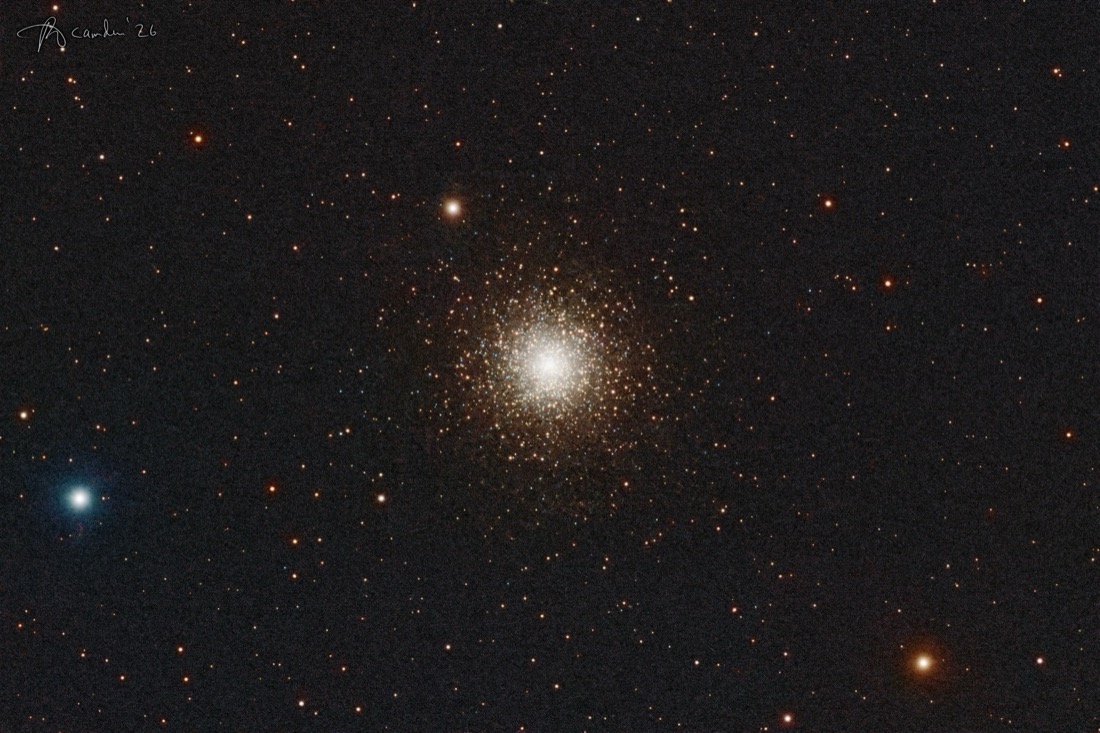
NGC 7078, in Pegasus · October 11–13, 2026
About 3.3 hours over three nights on an Askar 80 and an ASI2600MM Pro — LRGB, with 1-second exposures blended into the collapsed core so the centre stays resolved, and true star colours: old red giants orange, hot horizontal-branch stars blue.
The image →
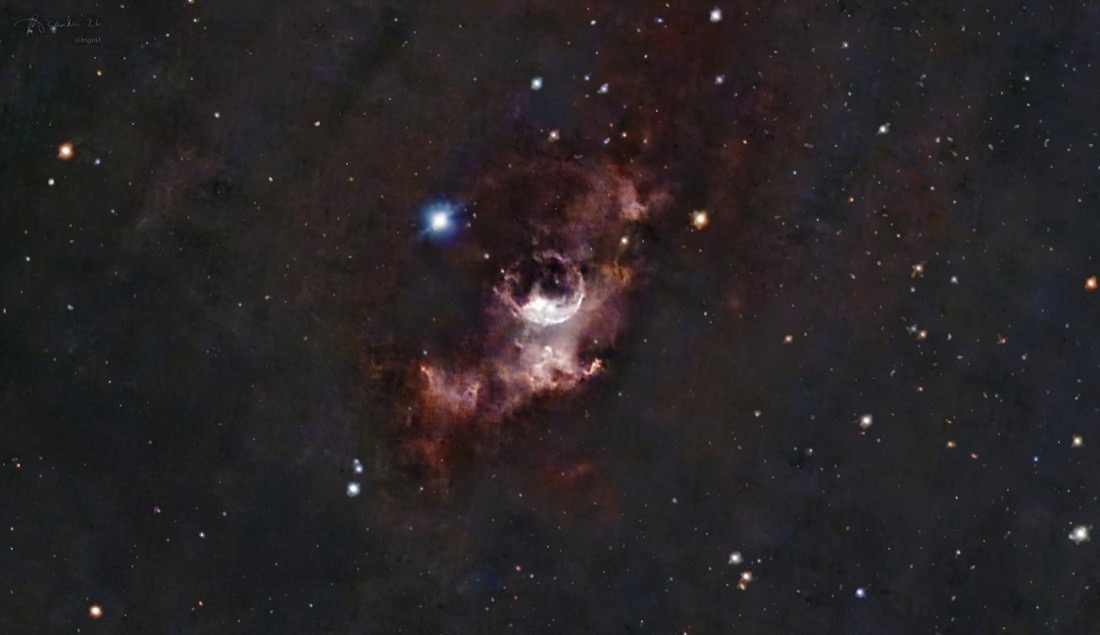
NGC 7635, in Cassiopeia · October 15, 2026
A shell of gas 7 light-years across blown by one huge star, about 8,000 light-years away. I’ve avoided faint nebulae like this on the Celestron Origin because of walking noise but not any longer. 2 h 20 m in one night.
The image →
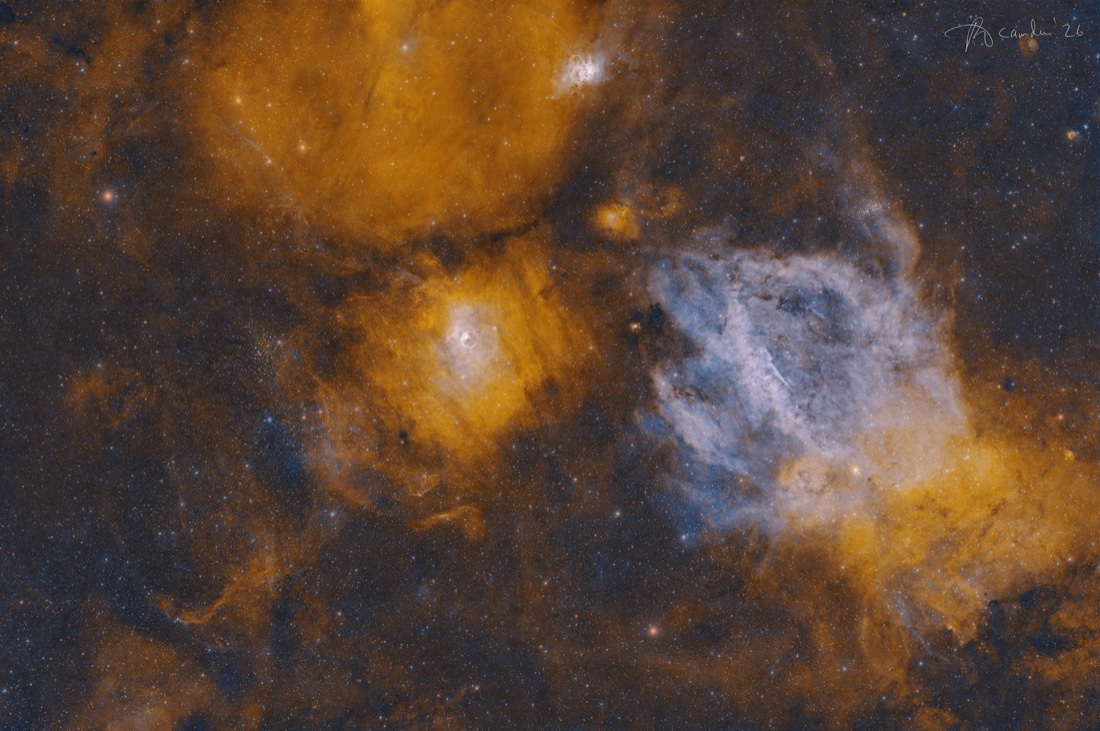
Sh2-157, NGC 7635 and M52, in Cassiopeia · September 20–26, 2026
26.5 hours over five nights on an Askar 80 and an ASI2600MM Pro — in the HOOSy palette — hydrogen gold, oxygen blue, sulphur adding depth to the red — and true-colour stars from separate RGB exposures.
The image →
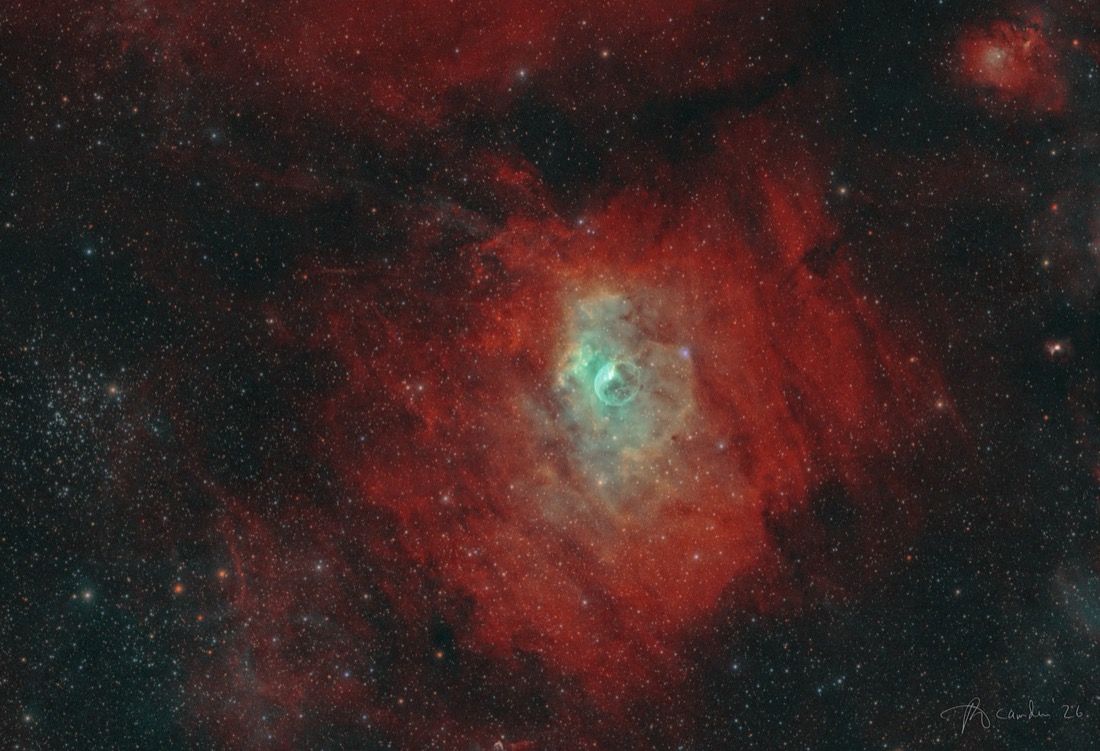
NGC 7635 and M52, in Cassiopeia · September 20–26, 2026
A close-up from the same 26.5 hours as the Lobster Claw, in the Foraxx palette — hydrogen warm red where there is little oxygen, oxygen cyan around the Bubble itself, and the stars in their real colours.
The image →
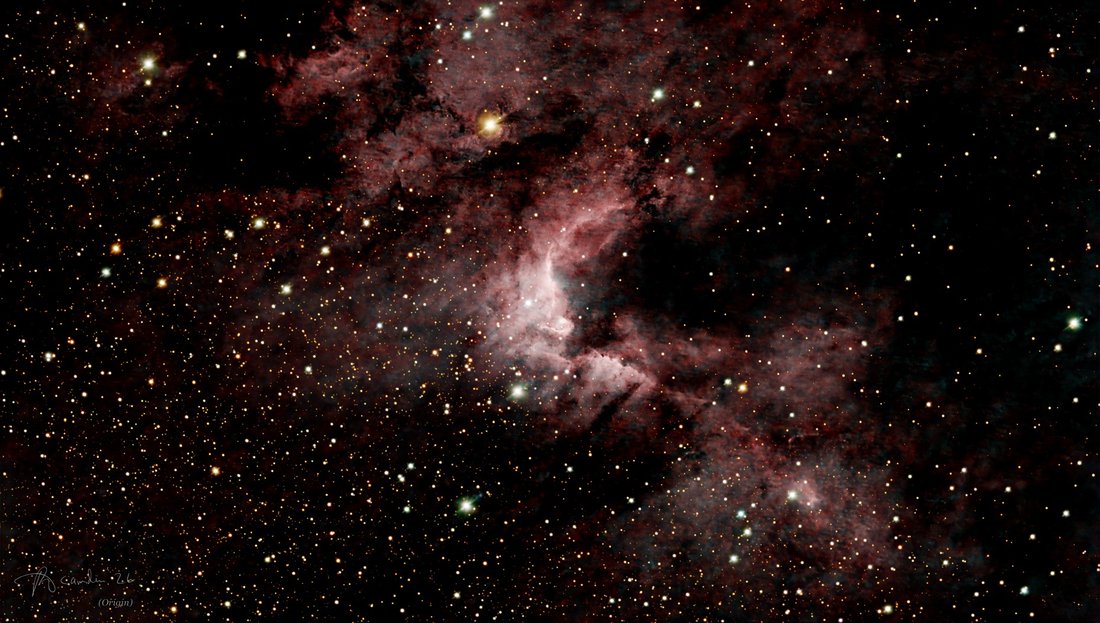
Sh2-155 (Caldwell 9), in Cepheus · September 30 – October 1, 2026
7.3 hours on a Celestron Origin through a triband filter — walking noise traced to a June dark shot too warm, fresh darks at the night’s own temperature, and the stars stacked a second way so they keep their real colours.
The processing →
The image →
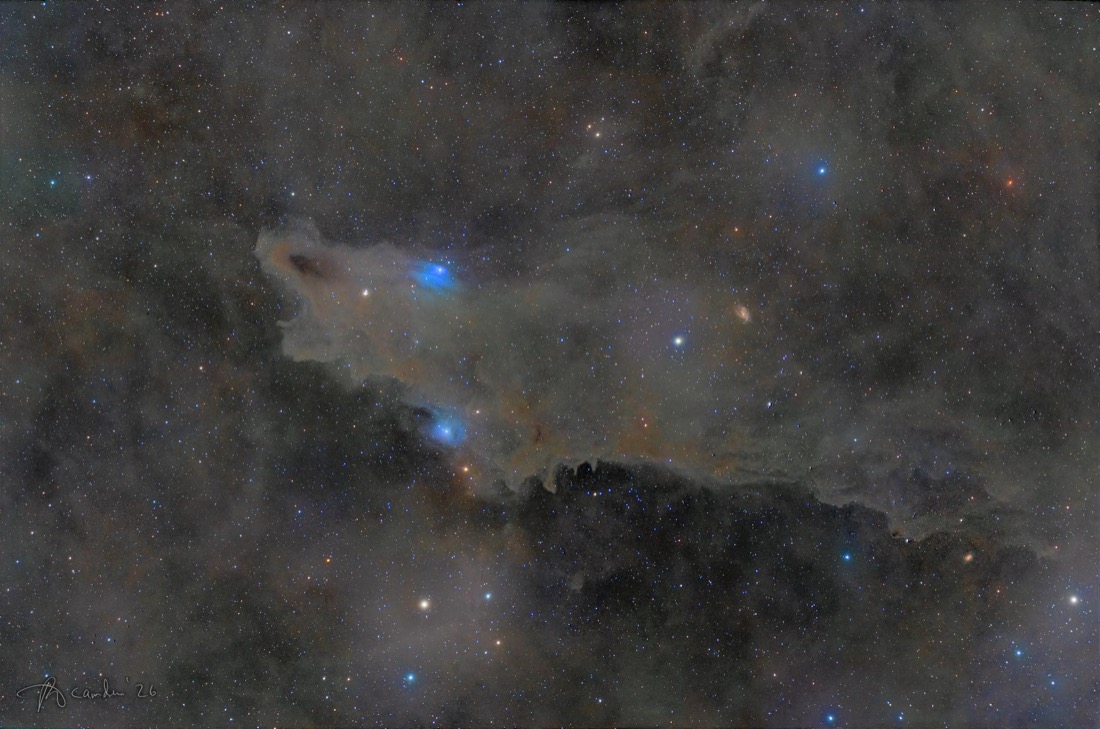
LDN 1235, in Cepheus · September 15–18, 2026
A cold dust cloud that doesn’t glow — 15.4 hours of LRGB on an Askar refractor and an ASI2600MM Pro, and most of the processing spent telling real dust from fake.
The processing →
The image →
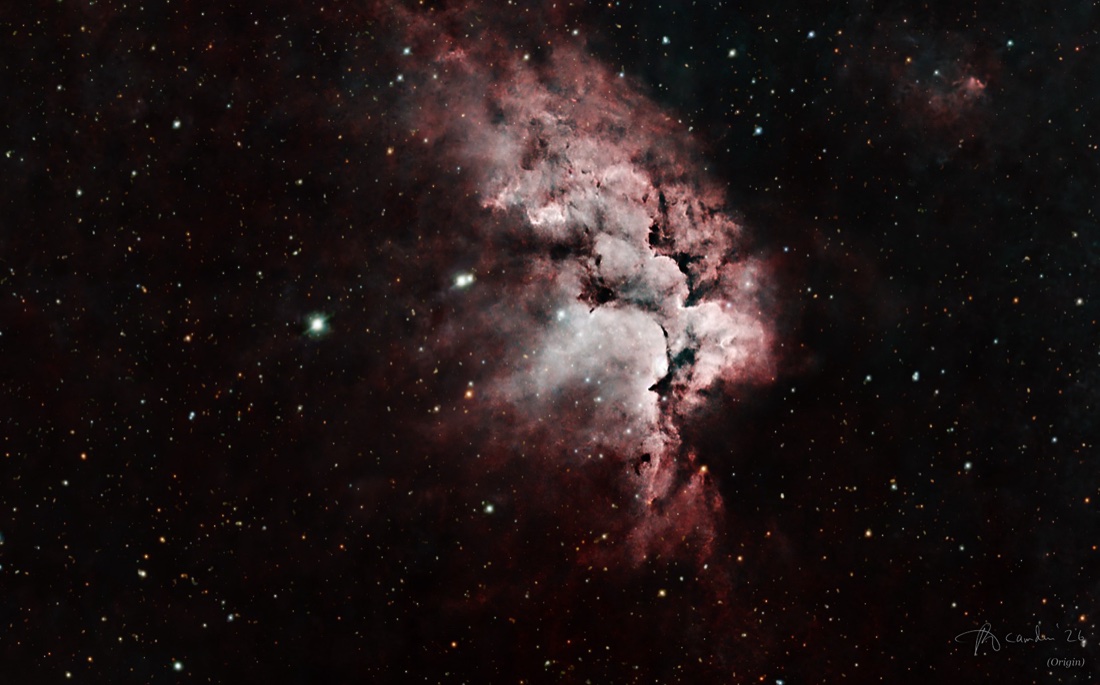
NGC 7380, in Cepheus · September 26–27, 2026
3.2 hours on a Celestron Origin through a triband filter — a wrapped power cable and 49 subs culled, hydrogen and oxygen split from a colour camera, and the stars stacked a second way so they keep their real colours.
The processing →
The image →
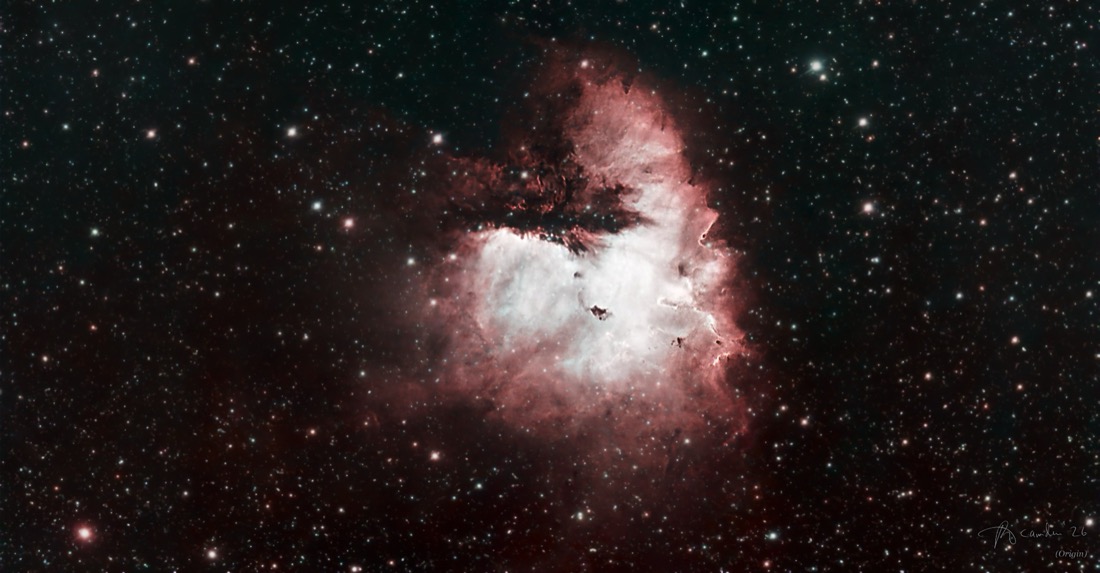
NGC 281, in Cassiopeia · September 25–26, 2026
6.5 hours in one night on a Celestron Origin through a triband filter — a colour camera pulled apart into hydrogen and oxygen, six sessions merged, and the banding cleaned out.
The processing →
The image →
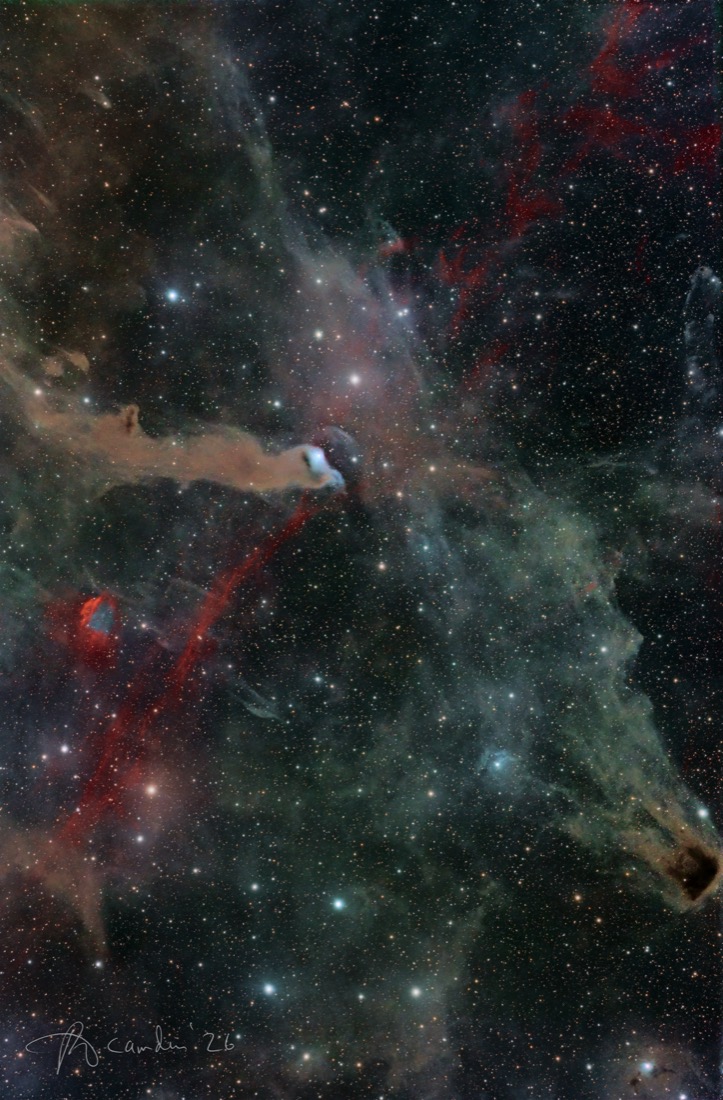
vdB 152 / Barnard 175, in Cepheus · September 12–20, 2026
About 20.7 hours over three nights on an Askar refractor and an ASI2600MM Pro — then six days and twenty-four versions to process it. Both logs include every mistake, mine and the machine’s.
The capture →
The processing →
The image →